The educated Tanguero

23/07/2015
by Richard Stoll
Comments Off on Roberto Firpo

Roberto Firpo

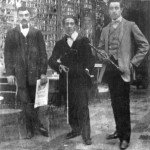
The first tango musicians at the beginning of the 20th century were amateur musicians without formal musical training (including Vicente Greco, Juan Maglio, Eduardo Arolas, and Angel Gregorio Villoldo), some of whom played in the tradition of the payadores, the Argentine itinerant musicians. Among other things, they integrated rustic rhythms like milonga and candombe, as well as other Creole elements, into the nascent tango and founded the first orchestras. Until then, there were no dedicated tango orchestras, so the characteristic instruments had to be discovered and the performance techniques developed. These early tango musicians are collectively known as the “guardia vieja” (old guard). The first orchestras played a significant role in developing the musical tools and performance structures that shaped the character of tango. In a historical context, this period ended around 1925 and led into a transitional phase in which the orchestras evolved into their final form, the EDO, around 1940.
Continue Reading →

19/07/2015
by Richard Stoll
Comments Off on Rafael Canaro – the little brother

Rafael Canaro – the little brother

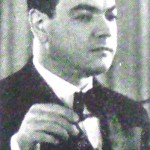
Rafael Canaro was born on June 22, 1890 in San Jose de Mayo, Uruguay, as the brother of Francisco Canaro (Francisco had two other brothers besides him, Luis and Mario, all of whom were tango musicians) [1]. In 1925, he visited Paris as part of a contingent of musicians from Francisco’s orchestra, in the midst of the second Tangomania, and played double bass and saw (!) there [1]. He returned in 1926 and conducted his own orchestra in Paris, which played until 1936. In Europe, he also played with Carlos Gardel, who subsequently became one of his closest friends. Due to the war, he returned to Buenos Aires and died there on January 28, 1972.

Continue Reading →

03/04/2015
by Richard Stoll
Comments Off on Ada Falcon. The Empress of Tango (Yo no se que me han hecho tus ojos).

Ada Falcon. The Empress of Tango (Yo no se que me han hecho tus ojos).

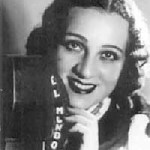
After writing my blog post about Francisco Canaro, I must confess that I was particularly inspired by his affair with Ada Falcon. It’s not often that such a story begins with a piece of music, but it’s more common for these stories to end dramatically. So now I’m (almost compulsively) writing a blog post about this story..

Continue Reading →

06/11/2014
by Richard Stoll
Comments Off on El Adios

El Adios

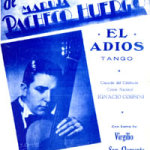
This is one of the most important tangos, well-known and performed by many artists. As a DJ, I feel this is one of the golden songs, frequently played and requested. So let’s delve a little deeper. (By the way, if you’re not familiar with the song, you’ll find some videos featuring the music below.)

Continue Reading →

08/03/2014
by Richard Stoll
Comments Off on La Cumparsita

La Cumparsita

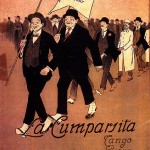
No other tango in history has caused so much confusion and controversy. Everyone loves it, almost every tango orchestra has played a version, and it’s played at nearly all milongas that adhere to the traditional Argentine codices. Even this little song didn’t begin as a tango.

423px-La_cumparsita_partitur

Continue Reading →

25/01/2014
by Richard Stoll
Comments Off on Nueve de Julio

Nueve de Julio

I’ve been accused of placing too much emphasis on modern and neo-tango music on this blog. I agree, I admit it, and I regret it. I would actually like to start a new series of articles with a more traditional focus, but I want to concentrate again on musical topics and some basic knowledge for experienced tango dancers.

There are some typical tangos that everyone knows and that most of us can identify and name by their original Spanish title. These (let’s call them ‘great tangos’) were usually played by different orchestras and have a firm place in international tango folklore.

Some of them have a story to tell. Some have a very special text, some none at all. Some are difficult, some are easy.

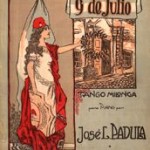
Today we begin with the tango ‘Nueve de Julio’ or ‘9 de Julio’. This tango is purely instrumental, not particularly demanding in its original form, but it is famous and everyone knows it.

Continue Reading →