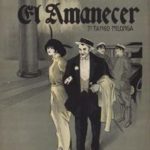
A few days ago, I listened to the music of the French singer Zaz (Isabelle Geffroy), who has a rather unique style that can be described as a blend of chanson, soul, and gypsy jazz. I listened to her videos on YouTube and really enjoyed watching her both in the studio and on the streets of Paris. Anyway, this isn’t really about tango, but one of her songs stood out. It was a jazzy interpretation of ‘Historia de un amor’—still not a tango. Don’t think this song is new to me. It’s actually one of the biggest Latin American hits, which has been interpreted by more than 200 singers across South America, Europe, and even Russia. A day later, I still had the song stuck in my head and even started translating and partially reciting the lyrics. So, I had to write this blog post about a unique song. Don’t worry, tango will still play its rightful role here. To understand my feelings, we need to take a closer look at the story behind this song.
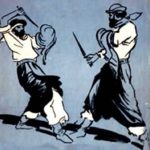
Duelo Criollo
It is certain that the Argentinians, and especially the immigrants of the first, more Spanish-influenced wave of immigration and their descendants, the “Criollos”, lived in a harsh environment; the fact that dueling with a knife was part of their everyday life is often recounted in tango lyrics.
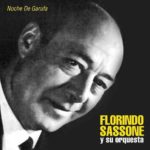
Continue Reading →Florindo Sassone
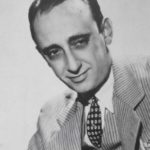
Sassone (born 1912 – died 1982) is rarely heard at milongas. Why? When colleagues are asked about it, they often say that this artist is post-EDO and doesn’t belong at milongas. Is that really true?
The idea for this blog came to me today while listening to laut.fm radio this morning. Laut.fm plays music on their tango channel, featuring tandas and cortinas, and they have exceptionally good taste in music (the link is below). So I was all the more surprised when I came across the following tanda by Sassone, precisely because the pieces aren’t among the “Big 100” that you always hear at milongas. The music has a fresh and, in my opinion, quite danceable sound, so I decided to do a little more research.
Continue Reading →Sabina Olmos – Dime mi amor
Sometimes, when you least expect it, you make special discoveries. Like yesterday, when I was thinking about a tanda to “Dime mi Amor” by Juan D’Arienzo with Hector Maure. A search in my database turned up two alternative versions: a very good reproduction by Solo Tango Orquesta and a version by Sabina Olmos. I thought I knew most tango singers, but this name was new to me. The version began with a vocal part accompanied only by the orchestra, with a predominantly lyrical timbre in a voice that sounded somewhat high and a bit unusual for a tango singer. So, who is Sabina Olmos? Let’s find out!
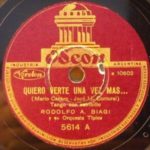
Quiero verte una vez mas
What is a perfect tango? For me, it’s a song that is musically interesting both harmonically and rhythmically, features a melodic contrecanto, has a good dose of polyphony, is well-instrumented, and comes with lyrics that have the potential for the vocal expression of emotion and drama. “Quiero verte una vez mas” is by no means the perfect tango, but it has many of the qualities from the list above.
Dancing to music – in show dance?
Many dancers enjoy showing off their skills on the dance floor. Good dancers do this at competitions, in exhibition dances, or at dance events; less skilled dancers sometimes do too, and yet…
I’m bringing this up because yesterday I wanted to show a friend—not a dancer—that tango is different from what the average person outside of Latin America imagines. So I watched a random YouTube video with her (well, it was from one of the better couples) and immediately got the question: “Is that scripted?” I replied with a resounding, “Of course!” A few glasses of Malbec later, I unintentionally started brooding over the situation.
Tone painting in tango
The language uses onomatopoeia (sound painting) [1] to intensify expression, natural sounds are imitated independently of a language, but using its phonemic repertoire, and possibly even put into words. Applied to music, the same approach is used, but in the language of music, executed by musical instruments under the term tone painting [2]. In particular, an engagement with nature and subjective experience encouraged composers of the late Baroque and Classical-Romantic periods to incorporate tone painting into their compositions (for example, Hector Berlioz’s Symphonie fantastique, 1830, e.g., the end of the fourth movement). The tool of tone painting is also used in 20th-century tangos. I have compiled some examples here with friends:
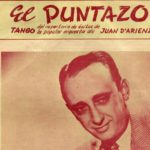
Juan D’Arienzo (The King of Compas)
On the one hand, the goal of this blog is to give tangueros a better understanding of music and dance; on the other hand, a blog should also offer subjective and personal information. So, here are my personal impressions. When I learned in the 90s that Argentine tango wasn’t just theoretical, and when I started listening to tango music from South America, Juan D’Arienzo was one of the first names I learned. I began with three CDs: one by Osvaldo Fresedo, another by Trio Hugo Diaz, and a CD with the soundtrack to “The Tango Lesson.” After watching the film several times and playing the CD even more often, it became clear to me that my favorite music would undoubtedly be by Juan D’Arienzo. I hadn’t yet understood Fresedo’s music, and while I found Trio Diaz musically fascinating, I had no idea how one could ever dance to it. The two songs I particularly liked here were the recordings of “El Flete” and “Pensalo bien”. This was mainly because of the way rhythm was handled in this music.
26/01/2018
by Richard Stoll
Comments Off on Modern tangos in the style of old masters of the Cuarentas
Modern tangos in the style of old masters of the Cuarentas
In the post-EDO era, the performance styles of tango orchestras changed significantly. The orchestras became smaller, no longer primarily focused on dancers, and expanded their capabilities to encompass a broader spectrum of dynamics and emotional expression. New composers (e.g., Piazzolla) demanded this flexibility and, moreover, a new level of instrumental virtuosity. This gave rise to a new generation of tango orchestras that sought to give classical compositions a fresh acoustic dimension. However, particularly in the late 20th and early 21st centuries, these orchestras found themselves in a difficult position. On the one hand, they had to learn the tools of a modern performance style; on the other hand, with the tango renaissance, they were once again in high demand at milongas, and danceable music became a crucial factor for their financial survival.
José Maria Lucchesi
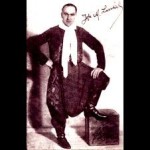
As a DJ, I occasionally look for rarely played orchestras, and in this search I had the opportunity to discover the orchestra of [name of orchestra], which certainly does not belong to the mainstream. Ifand Maria Lucchesi to stumble upon, which, however, seems to be gaining more and more attention among tango DJs. Lucchesi was born on March 29, 1897, in Sorocaba (Brazil) [1,2], received a solid musical education and primarily played accordion, but also piano, harmonica and guitar [3]. However, he recorded his tangos primarily in Europe, mostly in Germany, France, and Spain, sometimes under the pseudonym Leal Pescador (“The Loyal Angler,” because fishing was apparently one of his favorite pastimes) or as Jose Maria de Lucchesi. In 1942, he became a French citizen. The name of his orchestra was “José M. Lucchesi South American Orchestra“. With this orchestra, he primarily played tangos, waltzes, and paso dobles across a very wide range. Interestingly, he had his musicians (as well as Canaro’s orchestra) perform in gaucho clothing (see picture).