In the 1920s and up until the mid-1930s, tango was still interpreted in a more traditional rhythmic style by smaller ensembles (sextetos). Many orchestras successfully performed with singers (mostly in the role of estribilista) and were able to establish themselves … Continue reading
Category Archives: Orchestras
OTV – The Invisible Orchestra
Imagine a football association overseeing 20 teams with varying degrees of talent, including players and coaches, and then being invited to an international championship. What do they do? They assemble a team from their best players and have them coached … Continue reading
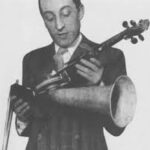
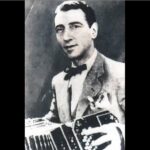
Francisco Lomuto
As a DJ, one naturally views the orchestral diversity in tango with different eyes than when considering this issue from a music historical perspective. Nevertheless, I often listen to tango music without any specific requirement of milonga suitability, and I … Continue reading
Julio De Caro – The Guardia Nueva
Let’s take a trip back to the early days of tango. The musicians of the so-called ‘Old Guard’ (‘Guardia Vieja’) were generally not formally trained instrumentalists with conservatory education. Consequently, their compositions tended to be rather simple, or the musicians … Continue reading
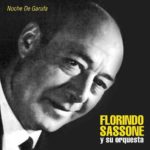
Florindo Sassone
Sassone (born 1912 – died 1982) is rarely heard at milongas. Why? When colleagues are asked about it, they often say that this artist is post-EDO and doesn’t belong at milongas. Is that really true? The idea for this blog … Continue reading
Juan D’Arienzo (The King of Rhythm)
On the one hand, the goal of this blog is to give tangueros a better understanding of music and dance; on the other hand, a blog should also offer subjective and personal information. So, here are my personal impressions. When … Continue reading
26/01/2018
by Richard Stoll
Comments Off on Modern tangos in the style of old masters of the Cuarentas
Modern tangos in the style of old masters of the Cuarentas
In the post-EDO era, the performance styles of tango orchestras changed significantly. The orchestras became smaller, no longer primarily focused on dancers, and expanded their capabilities to encompass a broader spectrum of dynamics and emotional expression. New composers (e.g., Piazzolla) … Continue reading
José Maria Lucchesi
As a DJ, I occasionally look for rarely played orchestras, and in this search I had the opportunity to discover the orchestra of [name of orchestra], which certainly does not belong to the mainstream. Ifand Maria Lucchesi to stumble upon, … Continue reading
Roberto Firpo
The first tango musicians at the beginning of the 20th century were amateur musicians without formal musical training (including Vicente Greco, Juan Maglio, Eduardo Arolas, and Angel Gregorio Villoldo), some of whom played in the tradition of the payadores, the … Continue reading
Rafael Canaro – the little brother
Rafael Canaro was born on June 22, 1890 in San Jose de Mayo, Uruguay, as the brother of Francisco Canaro (Francisco had two other brothers besides him, Luis and Mario, all of whom were tango musicians) [1]. In 1925, he … Continue reading