
Last year, Pioneer finally managed to release a stable driver for connecting Windows notebooks to their professional DJ mixers. Almost simultaneously, these mixers were also fully certified by Native Instruments for their Traktor Pro 2.0 (version 2.11) DJ software, so compatibility should now finally be possible.
What makes this news so interesting, especially for a Tango-DJ?
For a typical DJ in the club scene, Pioneer 4-channel mixers and CD players are standard equipment. Therefore, this DJ needs to be able to easily connect their laptop to the mixer (e.g., DJM-900NSX or, in the newer version, DJM-900NSX2, or alternatively, DJM-2000NSX and NSX2) via USB cable. These popular mixers are then recognized as sound cards and can be precisely controlled (with 4 stereo channels) by the DJ software. In addition, almost all controls can be freely customized to the software via MIDI mapping.
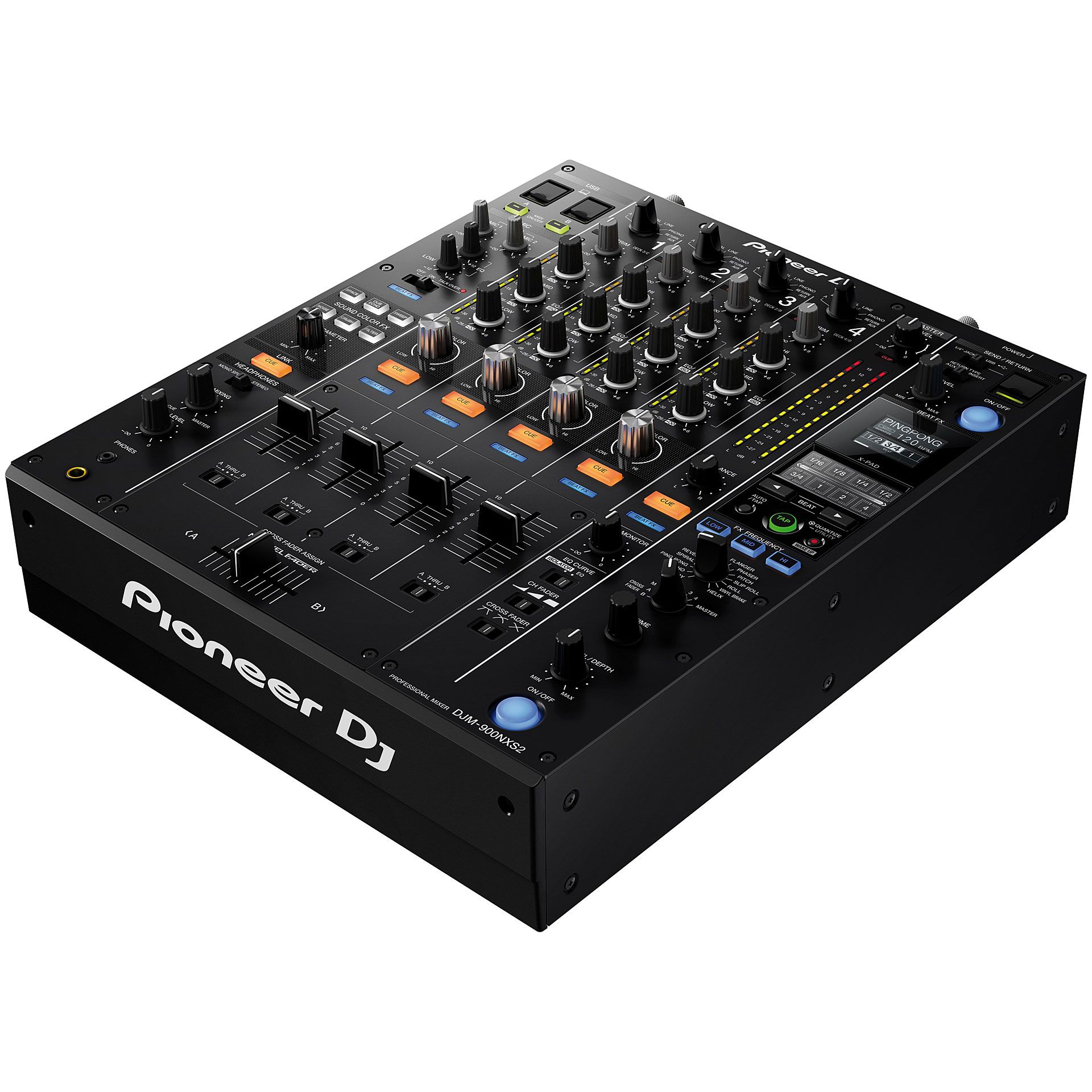
A tango DJ will hardly need more than two channels, and while using a mixer is nice, it’s only really useful if you’re also using other music channels and microphones. Nevertheless, I personally prefer mixing manually, hate autocruise, and like to control my players with hardware (Native Instruments Kontrol X1). However, when I recently tried out the new drivers with my own mixer, the following thought occurred to me:
To achieve the most seamless processing chain possible without too many losses due to device transfer interfaces, there are basically two ways:
1. A minimal chain of devices, ideally only one external sound card without additional components.
In this process, the digital signal provided by the PC undergoes a D/A conversion and is immediately transmitted to the speakers via cable, preferably balanced cables.
This avoids quality losses due to analog technology and various A/D or D/A conversions.
2. A sensibly designed chain of devices with purely digital signal paths and a final D/A conversion in the last device link.
Which components are useful in semi-professional sound systems? The use of an equalizer is certainly debatable, but it was recently recommended for tango DJs. Here, it’s not only used to adjust the speakers to the room acoustics, but also to influence the frequency response depending on the recording medium (shellac vs. vinyl). You can find more information on this topic on Igor’s blog:
Small sound systems are often set up with a combination of four main speakers and possibly a subwoofer. Monitors for the DJ are also frequently included, but these can (and should) usually be conveniently connected to the mixer’s booth output. The speakers (mostly active these days) can typically be daisy-chained. Modern speakers have output jacks for this purpose. However, using a speaker matrix is simpler and easier to control. This device actively distributes the output signals to the individual speakers. With a matrix, the balance can be centrally adjusted on one unit, and a limiter can be set for the maximum volume if needed. Personally, I’m not a fan of using a compressor.
The components I used are the Behringer Ultracurve Pro DEQ2496 graphic equalizer and the Behringer DCX2496 speaker matrix. Both devices are digital, but offer studio-quality 24-bit/96 kHz A/D and D/A converters at their input and output, respectively. Additionally, digital signals can be directly passed through via AES/EBU.
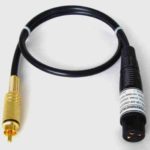
Until now, it was common practice in the DJ industry to feed signals into the mixing console via analog signals and then pass them on from the console in analog form. However, this has changed with modern semi-professional components like Pioneer’s mixing consoles. Since the mixing console has its own sound card, no analog-to-digital conversion takes place. Likewise, the mixing console delivers the output signal digitally via S/PDIF (optical and wired). Knowing that S/PDIF is not always compatible with AES/EBU, I tried connecting the RCA jack (digital master out) to the XLR input jack (AES/EBU) of my equalizer.
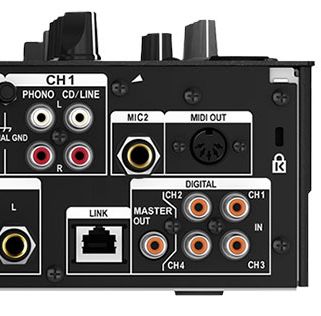
The equalizer features automatic S/PDIF format adjustment and processed the input format flawlessly. After connecting the EQ to the matrix, also via AES/EBU, the only D/A conversion in my transmission chain now takes place at the output of the speaker matrix.
I would love to report that this has dramatically improved the sound of the system, but I believe that my perception of the improvement is highly subjective. However, I did notice a significant leap in quality after switching from an analog to a digital mixing console.
Nevertheless, I now have a well-functioning setup and can once again devote my time to the main task of being a DJ, namely maintaining the music collection and constructing the Tandas.
Abrazos,
-Richard (DJ Ricardo)