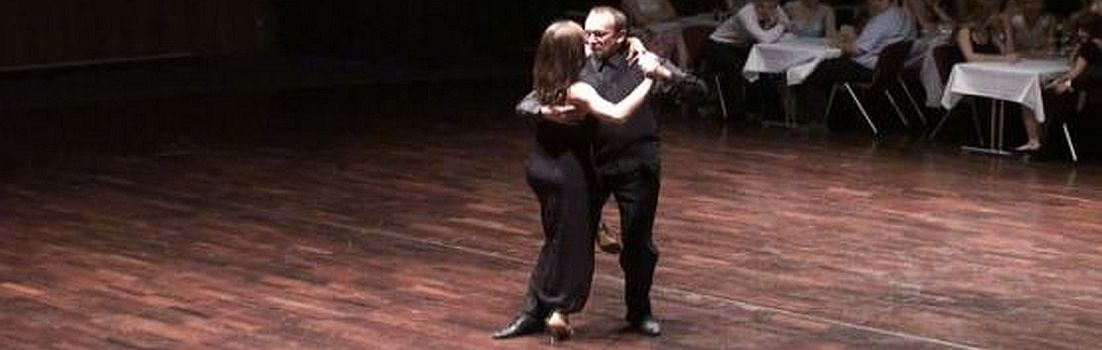

Tango is a trinity of music, poetry, and dance. This is a truth that every tango lover will learn sooner or later. Tango as music is loud and expressive, tango as dance varies between impressive and subtle, and the poetry in tango is usually very impressive and hardly perceptible to the typical non-Spanish-speaking tango dancer outside of Latin America.
Today I want to talk about the soul of tango. Sometimes at a milonga, people have had enough of Pugliese, neotango, or whatever they like, and they’re very tired. As a DJ, I respond to this by playing slow, relaxed music that allows people to unwind and gather energy for the final tandas. One of the songs that sometimes comes up is ‘Alfonsina y el mar,’ which, by our definition, isn’t a tango song. This song is known to almost everyone in Latin America, and I think a well-informed tanguero should know the background and meaning of this unique piece of music.
The song is named after Alfonsina Storni, a very popular poet and journalist. She is a legend in South America, but hardly known in Europe and Australia. She was born in Switzerland in 1892 and moved with her family to Rosario, Argentina, in 1901. In 1907, she joined a traveling theater troupe and performed as an actress [1]. Later, she worked as a teacher and journalist, but also published poetry. She was strongly influenced by her close friend Horacio Quiroga. Alfonsina was a fighter for women’s liberation and feminism in general, and she had a very sharp tongue.
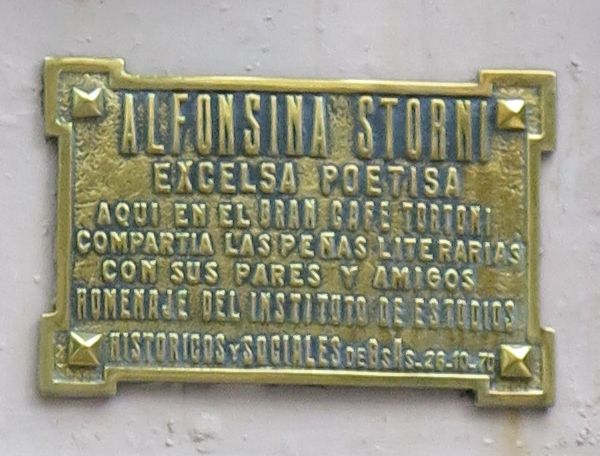
She was diagnosed with breast cancer in 1935. She underwent surgery and suffered greatly during the subsequent chemotherapy [2]. In 1937 and 1938, two of her best friends, H. Quiroga and L. Lugones, committed suicide. In 1938, she traveled to Mar del Plata, wrote her last poem, ‘Voy a dormir’ (I am going to sleep), which she sent to the newspaper La Nación, and committed suicide on La Perla beach [1, 2]. Her grave is located in the Cementerio de Chacarita in Buenos Aires.
If one considers this last poem (taken from [3]), the tragedy of their situation becomes clear:
Dientes de flores, cofia de rocío,
manos de hierbas, tú, nodriza fina,
tenme prestas las sábanas terrosas
y el edredón de musgos escardados.
Voy a dormir, nodriza mía, acuéstame.
Ponme una lámpara a la cabecera;
una constelación; la que te guste;
todas son buenas; bájala un poquito.
Déjame sola: oyes romper los brotes…
te acuna un pie celeste desde arriba
y un pájaro te traza unos compases
para que olvides… Gracias. Ah, un encargo:
si él llama nuevamente por teléfono
le dices que no insista, que he salido…
Here is a rough attempt at a translation into German (from [4]):
Flower teeth, dew hairnet,
Herbal hands, you, perfect wet nurse,
Prepare the earthly sheets for me
and the down comforter made of moss.
I’m going to sleep, my wet nurse, put me to bed.
Place a lamp at my headboard;
a constellation; whatever you want;
Everything is fine: make them a little darker.
Leave me alone: You can hear the buds bursting open…
A heavenly foot cradles you from above.
and a bird draws a pattern for you,
So you forget… Thank you. Oh, one request:
If he calls again,
Tell him not to try again, because I’ve left…
This is a truly beautiful and meaningful poem. The tragedy of her death inspired the historian and writer Felix ‘Falucho’ Luna to write the poem ‘Alfonsina y el mar’ (Alfonsina and the Sea, an ode to the unfortunate poet Alfonsina Storni) [5]. The music was written by Ariel Ramirez, ‘one of the most important representatives of Argentine folk music’ [6]. The song was performed by Mercedes Sosa in 1969 for her album ‘Mujeres Argentinas,’ making her an icon of Argentine folklore. Later, the song was performed by over 40 other musicians, including Placido Domingo, Nana Mouskouri, and Shakira [7].
This is the original performance by Mercedes Sosa. The original song is not a tango, but is played as a zamba. It is usually played with a piano as an interlude or with just guitar. Here are two examples (Mercedes Sosa performed this song in many variations):
http://www.youtube.com/watch?v=ZzhpTA95Bnc
http://www.youtube.com/watch?v=fpQvuquMhNY
It is very interesting to take a closer look at the text. Here, therefore, are the original text in Spanish and the English translation [8]:
Por la blanda arena que lame el mar
su pequeña huella no vuelve más.
Un sendero solo de pena y silencio llegó
hasta el agua profunda.
Un sendero solo de penas mudas llegó
hasta la espuma.
Sabe Dios qué angustia te acompañó
qué dolores viejos calló tu voz,
para recostarte arrullada en el canto
de las caracolas marinas.
La canción que canta en el fondo oscuro
del mar, la caracola.
Te vas Alfonsina con tu soledad,
¿qué poemas nuevos fuiste a buscar?
Una voz antigua de viento y de sal
te requiebra el alma y la está llevando
y te vas hacia allá como en sueños,
dormida, Alfonsina, vestida de mar.
Cinco sirenitas te llevarán
por caminos de algas y de coral
y fosforescentes caballos marinos harán
una ronda a tu lado;
y los habitantes del agua
van a jugar pronto a tu lado.
Bájame la lámpara un poco más,
déjame que duerma, nodriza, en paz
y si llama él no le digas que estoy,
dile que Alfonsina no vuelve más,
y si llama él no le digas nunca que estoy,
di que me he ido.
Te vas Alfonsina con tu soledad,
¿qué poemas nuevos fuiste a buscar?
Una voz antigua de viento y de sal
te requiebra el alma y la está llevando
y te vas hacia allá como en sueños,
dormida, Alfonsina, vestida de mar.
———————————————————————————-
Across the soft sand that the waves lick
Her small footprints are not coming back anymore
Only one path made of sorrow and silence
Reached the deep water
Only one path made of untold sorrows
Reached the foam
Only God knows about the anguish that accompanied you
And about the old pains your voice never told
That caused you to go to sleep, lulled by the song
Of the seashells
The song sung in the depths of the dark sea by
The seashell
You’re going away, Alfonsina
Along with your loneliness
What kind of new poems did you go looking for?
An ancient voice made of wind and salt
Is shattering your soul and taking you away
And you go there, like in a dream
Asleep, Alfonsina, dressed with the sea
Five little mermaids will escort you
Through paths made of seaweed and corals
And phosphorescent sea horses will sing
A round, by your side
And the aquatic dwellers
Will soon play by your side
Dim the light of the lamp a bit for me
Let me sleep in peace, nurse
And if he calls don’t tell him I’m here
Tell him that Alfonsina is not coming back
And if he calls never tell him I’m here
Tell him that I have left
You’re going away, Alfonsina
Along with your loneliness
What kind of new poems did you go looking for?
An ancient voice made of wind and salt
Is shattering your soul and taking you away
And you go there, like in a dream
Asleep, Alfonsina, dressed with the sea
——————————————————————————–
Interestingly, the strong reference to Storni’s last poem ‘voy a dormir’ in the paragraph from ‘Bájame la lámpara un poco más’ is noteworthy. The song isn’t a tango, but there are (more or less) danceable versions. I personally like the version by Medialuna Tango Project [9]:
http://www.youtube.com/watch?v=ImuPefgLKOk
The final question is: Should you use this music for dancing? Remember that the emotions and despair in this song are real, even if they are secondhand. Personally, I think Alfonsina would be very happy if you danced to the music, provided you remember her a little while listening or dancing.
Greetings from my vacation in good old Germany,
-Richard
Literature
1 http://en.wikipedia.org/wiki/Alfonsina_Storni
2 http://de.wikipedia.org/wiki/Alfonsina_Storni
3 http://www.los-poetas.com/j/storni1.htm#VOY%20A%20DORMIR
4 http://www.poemhunter.com/poem/i-am-going-to-sleep/
5 http://en.wikipedia.org/wiki/F%C3%A9lix_Luna
6 http://en.wikipedia.org/wiki/Ariel_Ram%C3%ADrez
7 http://es.wikipedia.org/wiki/Alfonsina_y_el_mar
8 http://lyricstranslate.com/en/alfonsina-y-el-mar-alfonsina-and-sea.html
9 http://www.amazon.de/gp/product/B002GUBJKC/ref=dm_att_alb7