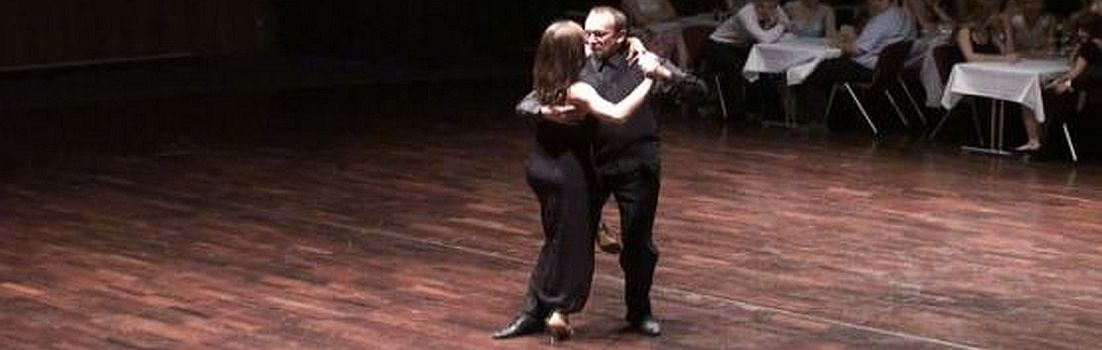

As a DJ, you usually work through your playlist or tandas from the database in the evening. But what happens if a guest suddenly appears and wants a specific track played?
Oh dear, that doesn’t fit into the plan at all!
Some DJs therefore reject audience requests more or less categorically (“I am a DJ and not a jukebox!”). Some even put up a sign:
Wishes: Poema 20$, Paciencia 10$, all others 5$
Others respond to audience requests according to the guest’s personality (nice article here:https://www.digitaldjtips.com/2011/03/dealing-with-dj-requests/). I expect to be asked politely, since tangueros and tangueras are all polite people (by definition). I personally see every audience request as a professional challenge. So, how do I proceed?
First, here is my approach, which is roughly divided into three phases:
1 – Identification and verification
If I don’t immediately know the title, I first perform a database query. To do this, I initially set the current playlist to autocruise, or at least ensure that I’m at least two or three tandas ahead in my planning. Then I search for the desired title in the database. Using the preview function, I might ask the guest to definitively identify the track (using headphones). This only happens, however, if the requested track is actually available in the database. By database, I mean the set of locally available music tracks that are stored and searchable in the DJ software’s database. If I don’t have the title, I always make a note of it; it could be a new and interesting CD. In that case, though, the audience request is already doomed.
2 – Classification according to flavor and danceability
The piece will now be quickly classified according to its danceability. If it is not suitable, I will politely decline the request. For danceable pieces, I attempt a rough categorization by flavor (rhythmic, soft rhythm, lyrical, dramatic), tempo, and instrumental/vocal.
3 – Search the Tanda database
If the piece is already in the Tanda database, the next step is unnecessary; constructing a Tanda during the Milonga is a task that distracts me from my actual job, and in this case, I prefer to use an existing and proven (?) Tanda.
4 – Creating an “on the fly” tanda with the desired piece.
If I don’t have the piece in the tanda database, I’ll probably have to construct a tanda “on the fly.” This term refers to the fact that a tanda quickly thrown together is certainly not perfect, but it doesn’t need to be in this case.
My goal is to find suitable pieces by the same orchestra and put together a (at least somewhat) fitting tanda. The tempo markings in the DJ software and the preview function are helpful in this process.
5 – Integration of the new Tanda.
Here, I switch off the autocruise function again and replace one of my planned tandas with the same flavor with the newly constructed tanda.
This process can be quick and easy, or it can take a bit more time and effort. I have two examples here:
A. The guest asks for “Fru-Fru” but does not know the orchestra.
Well, I know that one. Frou-Frou (originally composed by Henri Chatau) is one of the most beautiful waltzes, even though it wasn’t composed in Argentina. The only recording I have in my database is by Enrique Rodriguez and Roberto (“El Chato”) Flores from 1939 (unfortunately, I don’t have the recording by Libertad Lamarque with the Orquesta Mario Murano from 1938 that’s listed in Todotango, but it can be heard on YouTube). The correct spelling is debatable. The origin of the name isn’t entirely certain; it’s probably onomatopoeic, referring to the rustling of women’s undergarments around 1900 (see:https://www.duden.de/rechtschreibung/Froufrou).Just for humorous reasons, it should be noted that the title has nothing to do with the Austrian dairy product: https://de.wikipedia.org/wiki/Fru_Fru
Two clicks show me a suitable tanda in my database, which is then added as the next vals tanda, much to the guest’s delight. Incidentally, the other dancers weren’t affected, and I managed to include two more evergreens. Here’s another excerpt from my tanda database in the “Rodriguez/Vals” category.

Just out of interest, here is the version by Libertad Lamarque in the original video from 1939:
B – A guest asks for “Chique”
Oh, that’s easy, I thought. There must be dozens of interpretations of Ricardo Brignolo’s tango (composed back in 1920); my favorite is Daniel Binelli’s. Unfortunately, this hope proved false. The question asked for the Fulvio Salamanca Orchestra.
Oh dear, the orchestra is post-EDO and not played all that often. I only have two Salamanca CDs in my database, and luckily, one of them is “Chique.” The guest also identified the piece for me, so identification and verification are complete. The piece has a very danceable rhythm; only the bass solo around the middle takes some getting used to for tango ears. My classification leans more towards soft rhythm. Unfortunately, this piece isn’t in my tanda database (in fact, there wasn’t a single Salamanca tanda in there), so we’ll probably have to construct one. So now we need to review Salamanca’s material and create a provisional tanda. During a quick scan, the title “Bonboncito” immediately catches my eye, which seems to fit the simple “Chique” well. However, it’s a vocal piece with Amando Guerrico as the singer, while “Chique” is purely instrumental. Nevertheless, I’ll reserve the right to produce a mixed tanda for now. Other titles include “El Taita” and “Gallo Ciego,” although the latter has a slightly dramatic feel. After checking my playlist, I realize it doesn’t appear in any other tanda (it’s a classic, after all) and decide to include it as the last piece of the tanda, so I can switch to a more dramatic style in the next one.
So, which rules did I bend here? First of all, the rule to construct either an instrumental or a vocal tanda throughout. A conservative DJ probably wouldn’t have included Gallo ciego in the tanda either. Alternatively, I briefly considered Alma en pena, but I liked that even less as a duet with other singers, so the tanda shown here is certainly a compromise. It would also be problematic with very dramatic pieces like “Adios Corazon” or very romantic titles like “Vuelve amor,” which wouldn’t fit the rather conservative “Chic” vibe at all. Note well: How about a hyper-romantic tanda by Salamanca for one of the future milongas?
So this is the resulting tanda. It was well received (people danced, no one complained) and is now in my tanda database.

In conclusion, I would like to say that I am very happy to fulfill audience requests, because then I feel that I am really a DJ and not just pushing the playlist.
Abrazos,
-Richard (DJ Ricardo)