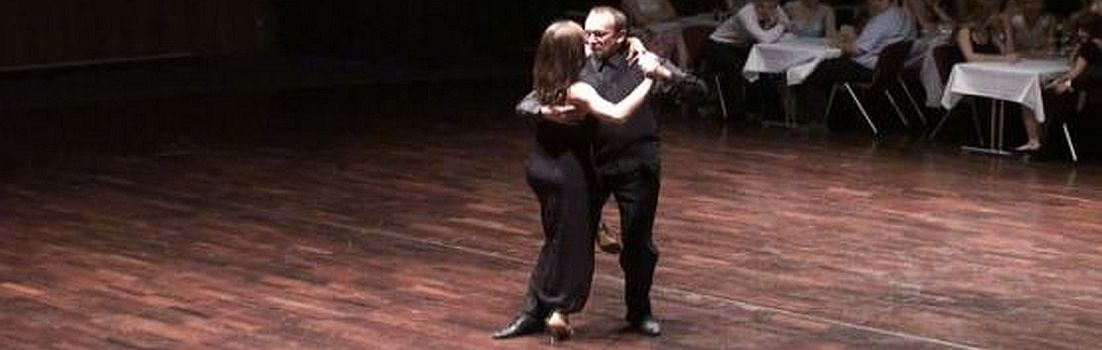
In the post-EDO era, the performance styles of tango orchestras changed significantly. The orchestras became smaller, no longer primarily focused on dancers, and expanded their capabilities to encompass a broader spectrum of dynamics and emotional expression. New composers (e.g., Piazzolla) demanded this flexibility and, moreover, a new level of instrumental virtuosity. This gave rise to a new generation of tango orchestras that sought to give classical compositions a fresh acoustic dimension. However, particularly in the late 20th and early 21st centuries, these orchestras found themselves in a difficult position. On the one hand, they had to learn the tools of a modern performance style; on the other hand, with the tango renaissance, they were once again in high demand at milongas, and danceable music became a crucial factor for their financial survival.
This resulted in a spectrum of orchestras, ranging from those performing musically cutting-edge tango with music that was hardly danceable (e.g., OT Fernandez Fierro) to those that primarily or secondarily attempted to present danceable music in the style of the old masters of the 1940s (Sexteto Milonguero being a prime example). In the 1940s and 50s, the major orchestras established their stylistic benchmarks, thus decisively shaping the interpretation of tangos. With some compositions, this has created stylistic expectations for the audience (tanguero, milonguero). New compositions therefore remain bound to a specific interpretive style. Examples include La Yumba (Osvaldo Pugliese), Loca (Juan D’Arienzo), and Bahia Blanca (Carlos di Sarli). Loca stands out here because it was composed by Manuel Joves in 1922 and has been interpreted many times up until the time of the EDO, e.g. by Donato Racciatti, Francisco Canaro, OTV and Carlos Gardel, Piazzolla and De Angelis, but most recently Juan D’Arienzo with his ultra-rhythmic version has shaped the interpretation of Loca.
Modern musicians and orchestras today have a vast amount of learning to do, as they must be able to master and reproduce the musical stylistic elements of the great EDO orchestras, especially when they include pieces in their repertoire that are already defined in terms of interpretation. It is therefore no surprise that modern orchestras record entire albums or individual pieces in the style of the great masters.
As a DJ, it’s incredibly tempting to experiment with these alternative interpretations. Reinterpretations that are barely distinguishable from Di Sarli’s originals, tracks that untrained ears would immediately recognize as D’Arienzo, and pieces that sound even more aggressive than Pugliese’s originals? No problem. I’ll elaborate on these examples below. I’d like to leave out the numerous orchestras dedicated to Piazzolla’s music at this point, as they play virtually no role at milongas (and for the DJ).
1. Osvaldo Pugliese
Let’s begin with Osvaldo Pugliese. The title with which he introduced his own style to the world is “La Yumba”.
Here is one of his recordings:
The title is an onomatopoeic reference to the rhythm. The use of this distinctive Yum-Ba-Yum-Ba rhythm, along with pronounced rubato passages, is typical of Pugliese’s music; he refined this style between 1946 and his legendary performance at the Teatro Colón in 1985.
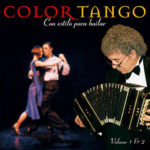
Some of his musicians, including the bandoneonist Roberto Alvarez (together with Victor Lavallen and Juan Carlos Zunnini), left his orchestra in 1989 to join the orchestra Color Tango to establish [1]. This group played in the style of Pugliese and was able to further develop that typical style. Here is Color Tango’s version of “La Yumba”:
For tango DJs, it’s very tempting right now to play a tanda with tracks from Color Tango. One strategy I like to use is to start (not directly) with a tanda of moderate tangos by Pugliese and then leave the strong rubato tracks to Color Tango later.
One of my tandas for this is:
Pata Ancha
Nochero Soy
La Yumba
A Evarista Carriego
all by Color Tango from 2007.
2. Carlos Di Sarli
Among the most popular tangos are certainly the pieces by Carlos Di Sarli. Between the early works (Sexteto di Sarli) and the later, highly dramatic pieces, Di Sarli changed his style several times, emphasizing this through his choice of singers.
One of his typical titles from 1948 is the tango “La Racha” which we hear here in its original version:
The Orquesta Tipica Gente de Tango under Guillermo Durante (piano) has released a CD entitled “Al Estilo Di Sarli” and successfully recreates the sound of the old master [2]. The result for the above title is here:
Here too, as a DJ we can easily substitute a tanda by Di Sarli with one by OT Gente de Tango, e.g. to include several tandas of Di Sarli music in a milonga without any qualms.
3. Juan D´Arienzo
Let’s look away from the more dramatic pieces and focus on the rhythmic category.. Juan D´Arienzo is the undisputed champion here. One of the less frequently performed tangos (undeservedly so), here is the title “El Puntazo,” danced by Esref Tekinalp & Vanessa Gauch Arabacioglu (with – incidentally – a remarkable choreography):
The same title here interpreted by Visceral Sextet [3]:
Other orchestras that play in the style of D’Arienzo include the Hyperion Ensemble, Solo Tango, Los Solistas de D’Arienzo, and Los Reyes del Tango. The Russian orchestra, in particular, is also noteworthy. Only Tango [4] Pavel Ratynski (bandoneon) and Artem Timin (piano) intentionally play traditional versions in the style of old masters (D’Arienzo, Pugliese, Canaro, and of course Piazzolla). Here, just for comparison, is their version of “El Puntazo” in the style of D’Arienzo:
If that doesn’t sound enough like D’Arienzo to you, then listen to “El Huracan” (also by Solo Tango):
From Solo Tango, it is not difficult to put together a Tanda:
El Puntazo
Felicia
Este es el Rey
El Huracan
All of Solo Tango. Except for Felicia (Historias de Tango 3, 2015), all are on “Historias de Tango 2” (2012).
Another orchestra that embodies D’Arienzo’s style even better is the La Juan D’Arienzo Orchestra, which also bears the master’s name. With four bandoneons, the orchestra is unusually large and can therefore reproduce the sound much more easily.
Here is the original “Loca” by Juan D’Arienzo played live (with 5 bandoneons):
For comparison, here is a live recording of La Juan D’Arienzo from September 2015, performed at the festival in Tampere:
4. Francisco Canaro
Francisco Canaro’s style ranges from rhythmic and down-to-earth to romantic and clear, even playful. Please forgive the somewhat simplistic description. Among his more romantic pieces are the songs “Invierno” and “Poema,” which are undoubtedly top hits at milongas around the world.
Here is the recording of “Invierno” by Francisco Canaro with Roberto Maida as singer from 1937:
In contrast, here is the reinterpretation of “Invierno” by Solo Tango from 2015:
“Poema,” also sung by Roberto Maida in 1935, is one of the most frequently performed pieces. It’s therefore no surprise that there are several reinterpretations. Here is the version by Orquesta Romantica Milonguera, sung by Marisol Martinez (on the CD Todo es Amor):
5. Osvaldo Fresedo
The early Romantic style of Osvaldo Fresedo has inspired many other orchestras. One of his best-known pieces is Buscandote, which we hear here in its original interpretation with Ricardo Ruiz:
Also from Solo Tango, here is an instrumental reinterpretation in the same style, again danced by E. Tekinalp and V. Gauch Arabacioglu:
6. Miguel Calo
Since we are now dealing with somewhat softer interpretations, here is an example of “Inspiration” from Miguel Calo:
Then the re-recording of Orquesta Tipica Sans Souci (whose name, incidentally, is one of Calo’s more well-known titles)[5]:
7. Fulvio Salamanca
Salamanca is usually classified as a post-EDO orchestra and is therefore not heard very often at milongas. Among their better-known pieces is the highly romantic song “Todo es amor,” here in the original version with Armando Guerrico:
Here is the new recording by Orquesta Romantica Milonguera with Roberto Minondi:
8. Ricardo Tanturi
Let’s first listen to the original title “Una noche de garufa”
Here is the new version of the Orquesta Tipica Tanturi, which in turn bears the name of its predecessor in its title:
9. Anibal Troilo
Anibal Troilo, nicknamed “Pichuco” and with his distinctive style “Sonido Troilo”, can be heard here with the title “Como se pianta la vida” together with Roberto Goyeneche from 1963:
Here is the new recording by the Orquesta Tipica Pichuco with the singer Hernan Castiello. The orchestra also bears the name of its inspiration.
In summary So here are the main reasons why we hear reinterpretations in the familiar style:
1. Musicians from one of the major orchestras broke away and formed their own groups with the aim of further developing the style of the old orchestra. Sometimes they were even specifically tasked with doing so (for example, Julio de Caro inherited all of Cobian’s arrangements in 1923).
2. Modern orchestras have deliberately chosen to play in the style of a model and specifically tailor their repertoire accordingly.
3. Modern orchestras play pieces that are strongly tied to a specific style of interpretation, and their interpretations remain extremely focused on the work and style. Thus, some orchestras may be proficient in several classical styles.
The final question remains: when should a DJ play such parallel interpretations? Essentially, almost always to some extent, to bring a bit of new excitement to a milonga. This should happen when there’s no risk of confusing the audience with unfamiliar sounds; as is often the case, it depends on the DJ’s taste and the situation. Enjoy!
-Richard (DJ Ricardo)
Acknowledgement
The content of this article was discussed on the Austrian forum Tanzmitmir.net. I would like to thank the following participants who contributed their expertise to this article:wko“, “Tango Vifzack”
Literature
1 http://www.todotango.com/english/history/chronicle/511/Confessions-by-Roberto-alvarez-in-Medellin/
2 https://es-la.facebook.com/orquesta.gentedetango
3 https://www.facebook.com/sextetovisceral/
4 http://stango.ru/english/
5 https://www.facebook.com/tipicasanssouci/