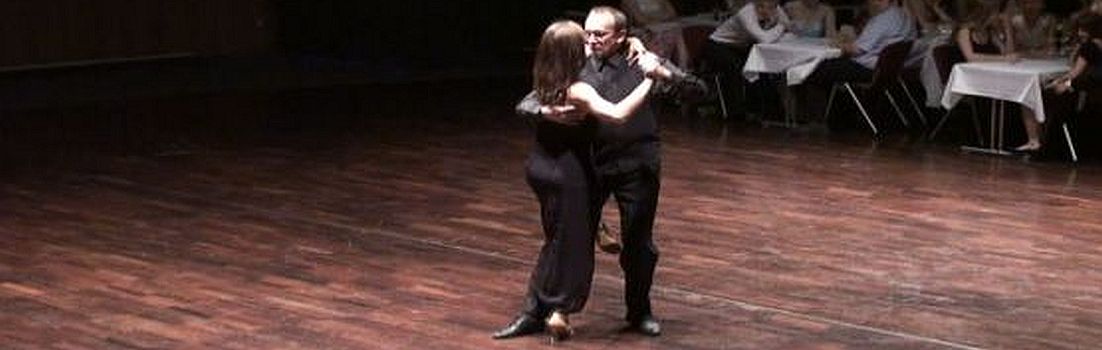

Tango is primarily a social dance (apart from tango show dancing, which is NOT the focus here), and after a beginner’s course, we want to dance and enjoy the wonderful music and atmosphere of the milongas. So why progress? Tango isn’t actually a highly structured social dance. The movements are almost entirely improvised, so communication is key. Without this communication, it becomes difficult and the fun is limited. You can feel this while dancing and also when counting the dances during a milonga. Beginners usually struggle to find a partner (leaders might notice that many cabeces are ignored and the dancers spend more time sitting than dancing). Of course, tangueros are polite (if they aren’t, they aren’t true tangueros), but this is a well-known issue. Please don’t confuse this with physical attractiveness. Of course, looking like a supermodel helps a lot, but most true tangueros would always prefer a better dancer (even if the partner doesn’t look like a supermodel). For advanced dancers who have mastered tango communication, finding a dance partner is definitely easier. What can a typical beginner do to improve after completing a first beginner’s course? Here are a few simple tips:
1. You can’t learn it without practicing it.
Attend tango events regularly and dance. Set aside enough time (at least once or twice a week) to dance and learn in a social setting. Try to dance with partners at your skill level and learn together. It’s helpful to have a regular partner, but you also need to practice your skills with other dance partners.
2. Learn the language of tango
Learning some basic steps is a good start, but eventually we want to communicate, so we need the vocabulary. Tango vocabulary refers to technical elements like ocho, pivot, gancho, or caminar. You need to learn to lead and follow these elements as both a leader and a follower. Then you’ll learn how to link them together. At first, it helps to practice common phrases (like the typical combination of parada, sandwich, and pasada), but later you’ll want to (and be able to) improvise your own.
3. Find a teacher
The quality of lessons depends heavily on the teacher’s personal communication style and philosophy. Choose a teacher who can convey the message clearly. They don’t need to be a native Argentinian speaker or a world champion, but the lessons should be meaningful and affordable. Don’t go to teachers who only teach sequences. They should teach you the language of tango, the vocabulary, and the body language used for communication. Ultimately, a good teacher should be able to analyze and correct your mistakes and help you overcome any personal challenges. Finding such a teacher can be difficult, so attend classes with several different teachers and make your decision.
4. Learn to use your body
While learning tango, we need to develop better control of our bodies in terms of balance, muscle tone, posture, and flexibility. This develops naturally as we learn tango, but some find it helpful to improve through specific exercise sequences. Others find it beneficial to attend classes like yoga, Feldenkrais, or Pilates, or to do a general workout at the gym. Remember that our body is the instrument we use to express our feelings in the dance. Therefore, it needs to function in a way that meets your expressive needs. Talk to your teacher, especially if you have any limitations (in social tango, no one will ask you to do a handstand or the splits).
5. Music is also important
Since we have to express the music with our bodies, it’s definitely helpful to have some musical knowledge. I was once asked why I can effortlessly dance a beautiful final dance precisely on the last beat of the song. My answer was: ‘Because I counted the beats of the last musical phrase.’ In reality, though, I know most of the typical pieces and can predict the ending almost perfectly because I’ve danced them countless times. Being a DJ definitely helps here, but it also helps to know at least some basics of tango history and to recognize some of the great tango orchestras.
6. Dress for success
Believe it or not, stylish clothing significantly improves dancing for some. So dress how you feel and enjoy the milonga. In tango, your clothing should allow for complete freedom of movement without hindering your dancing..
Dancing brings you close to each other, and tango dancing brings you very close indeed. I don’t think I need to elaborate on the importance of thorough personal hygiene and the sparing use of fragrances (less is often more in this case).
I’d like to talk about shoes. Shoes should have two qualities: First, they should support the foot and fit snugly to prevent injuries. Second, the soles should be suitable for the floor you usually dance on. That means they should strike a good balance between being slippery and sticky, allowing you to turn without risk of injury. So, you need a pair of dance shoes. The good news is that even inexpensive, standard shoes for under €150 are perfectly adequate (especially on wooden floors). If you have any questions, ask your teachers or experienced tango dancers. And yes, I know how much money one can easily spend on shoes alone.
7. Be open!
Just as different teachers have different teaching methods and prefer different styles, styles often play a more than necessary role in tango. While most tango dancers aren’t even able to describe a ‘style’ or name the differences, some teachers have a very clear sense of mission in this regard.
Tangueros should be open-minded, attend various milongas and practicas, and learn to dance with partners from different style groups.
8. Be polite and observe the often unwritten rules.
Visit different milongas and try not to bump into other dancers. Follow the rules (codigos) and adapt your dancing to the situation on the dance floor. Adjust your dance energy to the space (if you want to dance high voleos, make sure the airspace is clear. If it’s crowded, high voleos can be dangerous and should be avoided). Embrace the music, explore it, and dance to it. If you’re leading, dance in a way that your partner enjoys. Don’t try to talk your partner to them on the floor; we’re all here to dance.
If you attend a traditional milonga, don’t complain that only the old, worn-out tunes from the cuarentas (one of my very esteemed teachers—and I won’t mention her name here because almost everyone knows her—always called them ‘old chestnuts’) are played, and if you happen to attend a modern milonga, don’t complain that modern new songs (e.g., nuevo) are played. If you want to dance to a particular song or orchestra, just ask the DJ.
9. Understand the cultural background
Try to understand tango music. You don’t need to learn Spanish for this. Read translations of tango lyrics and try to internalize the idea of tango as a trinity of music, poetry, and dance. Try to understand where and how tango developed and what people had in mind when they created it. Understand the development of tango in the context of the history of Argentina, Uruguay, and other countries. Try talking to people from Argentina and listening to their stories. It’s also helpful to know the names of the most famous songs.
10. The journey is the destination
This sounds like Asian wisdom, but it’s actually a German proverb (‘The journey is the destination’). It means that no one can tell you how long it will take to become a truly advanced tango dancer. As you progress, you’ll find that the amount of things you have to learn constantly increases, and you’ll never reach mastery (it feels like approaching the speed of light in special relativity). This is definitely true; so many of us still consider ourselves beginners (a saying from my Aikido teacher was, ‘Aren’t we all beginners?’). What we need to learn from this is that the real reward lies in following this path. Enjoy the dances and the opportunities to meet interesting people, and keep at it. And if you ever get there—give me a free lesson 🙂
Abrazos,
-Richard