“Tango es una forma de ser” (H. Ferrer)
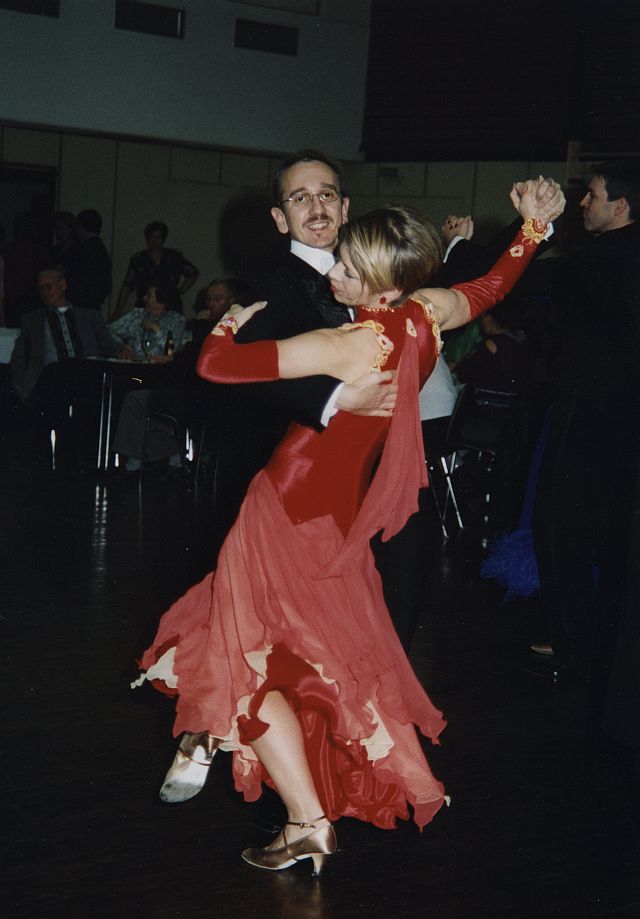
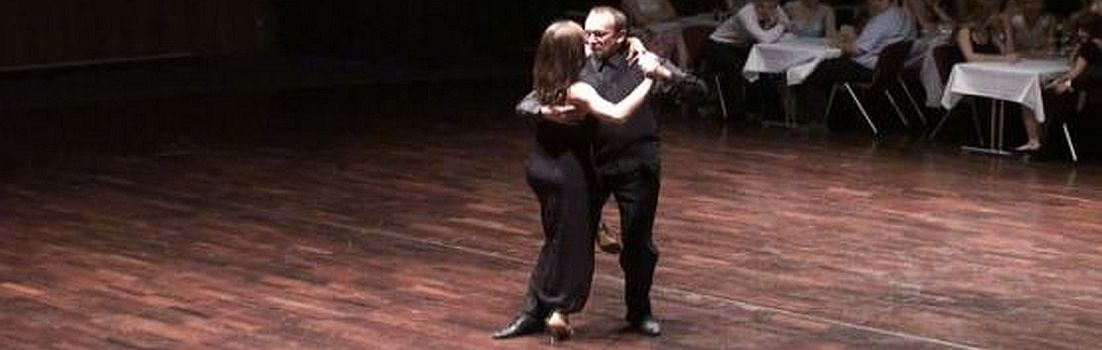
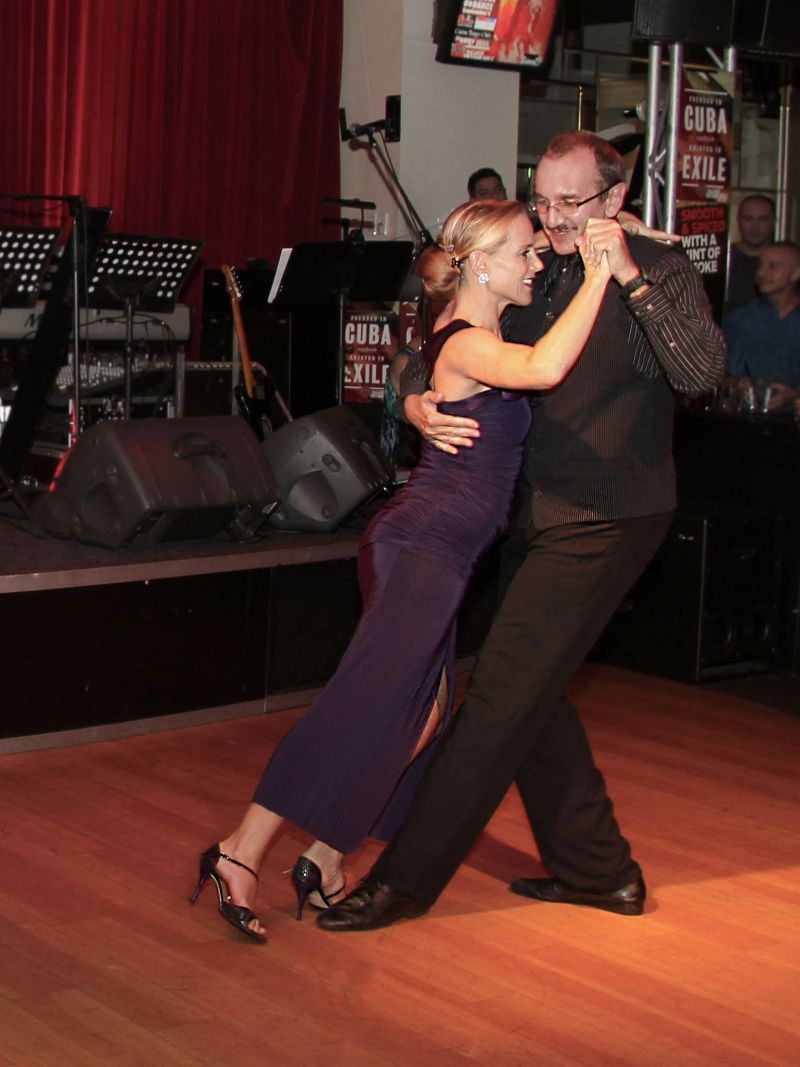
I’ve been dancing since I was 16 (my parents sent me to dance school) and have enjoyed both social dancing and competitive ballroom dancing ever since. During my years as a competitive dancer and later while training to become a dance sport coach, I learned that dancers must always seek the roots of their dance and its music. In standard tango, I started to refresh my routines with Argentine elements, then learned the tango of the Rio de la Plata, primarily inspired by my teachers Nicolle Nau and Ricardo Klapwijk, and ultimately found European tango dull and boring because it lacks the cultural background and the deep symbiosis with the music. During my training as a dance sport instructor (under the supervision of my esteemed teachers Evelyn and Bernd Hörmann from Hamburg), I learned that dancing requires a deep understanding of body movements, anatomy, biomechanics, and kinetics. A few years of Aikido training (in the university sports program at the University of Marburg) also contributed to this understanding. I understand dance movement in partner dancing as the flow of energy within and outside a connected system of two people communicating nonverbally. In tango, I seek a synthesis between traditional tango (Baile de Salon) and more modern forms (Nuevo, Fantasia), according to the music and the conditions on the dance floor—a style also known as Tango Liquido.
Forced into the role of DJ, I began to delve into the history of tango music and have been collecting tango music for over 30 years, constantly battling between my collecting mania and the demands of proper cataloging. I firmly believe that good tango can only be created through good music. This is especially true for the milonga as an event.
Tango is not just a dance, but also a cultural identity. In this context, I have deep respect and sympathy for the culture of Argentina and Uruguay, their people and traditions, their music, literature, and poetry. As a gringo with very limited Spanish skills, I will probably never fully understand them, but I try my best.
Tango is no longer the sole domain of Argentinians; it has become an international phenomenon. Tango thrives on the building of groups and communities. I firmly believe that tango cannot grow if it rests solely on a commercial foundation. The development of tango requires people who volunteer within their communities. I have immense respect for these individuals. Above all, I am grateful for the kindness and hospitality I have experienced as a guest at milongas all over the world.
In this blog, I want to share my modest knowledge, develop it further, and share it with my tango friends. I believe that only an intensive engagement with the subject can lead to understanding and, consequently, to good tango. Other tango enthusiasts might then realize that tango is more than just a few steps on the dance floor.
Here is my brief CV regarding dance and tango:
Tango
1988-1989 Tango lessons with Fabiana Jarma (Frankfurt)
2002-2006 Lessons with: Nicole Nau & Luis Pereyra, Fabiana Jarma & Julio Gordillo
Ricardo „El hollandes“ Klapwijk and Rotraut Rumbaum
Since 2003; Tango teacher for courses at the University of Marburg
Since 2004, class visits in the USA (San Antonio), Australia (Brisbane) and Buenos Aires
2011 – 2015 Tango teacher for the Tango Club in Cairns (QLD, Australia)
Lessons taken in Buenos Aires (Esc. Nacional del Tango and DNI)
I have taken lessons at various international festivals.
(including: Murat Erdemsel, Fabian Salas, Alejandro El Turco Suaya and Maria Plazaola)
2014 – 2015: President of the Cairns Tango Club
Tango DJ
Since 2004: Tango DJ in Marburg, inspired by DJ Didi from Giessen
Since 2013: DJ for the tango community in Cairns after emigrating from Germany to Australia
Since 2014: DJ at international events (Germany, Netherlands, Austria, Australia, USA, New Zealand)
Music & Music History
Radio College Music 1977/1978
Radio College History of Music 1987/1988, completed with certificate.
Speaker for a multi-hour lecture on the musical history of tango.
Speaker for a lecture on the great tango orchestras of the Cuarentas.
Competitive sport Standard / Latin
1975 First dance course
1979 First tournament for GTC Schwarz/Silber Trier
1981 Start in tournament classes C/D in Standard/Latin for RWC-Marburg
1984 Promotion to B-Class Standard/Latin after 2 years
1983 DTV Instructor
1986 Dance Sport Trainer C Standard/Latin
1992 Dance Sport Trainer B (Standard)
1994 Dance Sport Trainer B (Latin)
1996 Member of TSTV
1999 Promotion to Senior IA as a finalist in the Hessian State Championship
2001 Judge for DTSA, Judge training DTV (without qualification)
2004 Promotion to Senior IS Standard after 39 tournaments and 26 finalist places, including 10 places 1-3)
2005 Honorary Medal of the City of Marburg for achievements in competitive sports